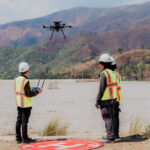

As Planate Management Group advances architectural and engineering services, we focus on integrating emerging technologies responsibly. These include drone-enabled 3D scanning, artificial intelligence, robotics, and additive manufacturing. While these tools improve efficiency and decision-making, they also increase cyber risk. For this reason, innovation and cybersecurity must progress together. Our recent CMMC Level 2 Certification reflects this commitment. It goes beyond compliance and acknowledges a core reality: advanced technical capabilities attract sophisticated cyber threats. As a Service-Disabled Veteran-Owned Small Business supporting defense and federal infrastructure programs worldwide, Planate takes this responsibility seriously. The real question is not whether cybersecurity matters, but whether organizations can stay ahead of evolving threats.
Each new technology expands our digital footprint. AI-driven design tools, drone-based inspections, and cloud-based project platforms create new access points that require protection. When we deploy drones for facility assessments in locations such as Haiti and the Philippines, we secure the data they collect and transmit. When we apply AI to analyze project data or optimize workflows, we protect that information with strong security controls. Our global teams rely on secure platforms to collaborate effectively. Today’s A&E firms do more than design infrastructure. They operate as technology-driven organizations. As a result, cybersecurity functions as a core operational requirement, not an afterthought.
Strong cybersecurity practices also enable innovation. During our CMMC implementation, we documented security controls and strengthened access management. We established incident response procedures and implemented continuous monitoring. These measures give us the confidence to adopt emerging technologies safely. They also allow us to compete for projects involving sensitive Department of Defense and federal information. Most importantly, they reinforce client trust by protecting critical data throughout the project lifecycle.
Cybersecurity will continue to serve as a competitive advantage for forward-thinking A&E firms. As the industry adopts digital transformation and predictive maintenance, firms that embed security from the start will lead the market. At Planate, we pair technical innovation with disciplined security practices. Whether we develop design-build packages for air bases in the Philippines, manage construction for VA healthcare facilities, or support infrastructure projects worldwide, we treat information protection as essential to mission success.
For A&E firms planning to adopt AI, unmanned systems, advanced manufacturing, or other emerging technologies, the guidance is clear. Build a strong cybersecurity foundation first. Innovation will follow, and clients will recognize the difference.